
Free Random Name Generator No Email Needed
Generate realistic random first names, last names, and full names customized by gender, cultural origin, and quantity. Perfect for software testing, creative writing, game development, and mock data creation.
Need step-by-step instructions or API usage tips? Read our Complete Random Name Generator Guide.
Generated Results 0 Names
⭐ Bookmarked Favorites 0
The Random Name Generator delivers fast, reliable, client-side utility calculations and format transformations. Engineered with high-precision JavaScript algorithms, it executes instantly in your web browser with 100% offline support and zero external server logging.
Comprehensive Guide to Random Name Generation
The Random Name Generator at Mini-Tool Factory is an enterprise-grade, browser-native utility designed to produce culturally accurate, high-entropy random names for software engineers, game developers, authors, UI designers, and privacy researchers. Unlike simplistic generators that rely on uniform unweighted word lists, our tool embeds comprehensive, multi-origin datasets covering 14 distinct nationalities and cultural traditions.
🔒 100% Client-Side Privacy
Every name generation request executes locally inside your web browser using HTML5 JavaScript. Your parameters, generated results, and exported files are never transmitted to external cloud servers, guaranteeing absolute data confidentiality and zero tracking.
🎲 Cryptographic Randomness
We utilize the standard Web Cryptography API (crypto.getRandomValues) to ensure unbiased, non-repeating statistical distribution when sampling from our database arrays, avoiding pseudo-random pattern biases.
🌍 14 Cultural Origin Datasets
Filter names authentic to American, British, French, German, Italian, Spanish, Indian, Japanese, Chinese, Arabic, Slavic, African, Norse, and Irish linguistic patterns with regional surnames and given names.
📁 Flexible Batch Export
Export up to 100 names at a time into clean plain text (TXT), structured CSV spreadsheets for SQL databases, or formatted JSON objects for automated frontend testing.
Primary Applications & Industry Use Cases
1. Software QA, Database Seeding & Load Testing: Backend developers and database architects frequently require large batches of realistic user identities to seed staging environments, run performance load tests, and populate mock REST API endpoints. Using real customer data in non-production environments risks severe compliance violations under regulations such as GDPR, CCPA, and HIPAA. Our random name generator provides realistic synthetic identities that keep your test suites representative without privacy liability.
2. Creative Writing, Fiction & Screenwriting: Novelists, screenwriters, and fantasy authors frequently encounter character naming block. Naming a cast of characters requires balancing cultural resonance, historical accuracy, and phonetic flow. By selecting specific origins such as Gaelic/Irish, Renaissance Italian, or Scandinavian Norse, writers can instantly compile realistic character rosters for protagonists, antagonists, and background cast members.
3. Game Development & RPG Tabletop Campaigning: Dungeon Masters running Dungeons & Dragons (D&D 5e), Pathfinder, or Cyberpunk campaigns need instant non-player character (NPC) names during live gaming sessions. When players unexpectedly ask a random town guard or tavern keeper for their name, game masters can click a quick preset to instantly generate authentic names on the fly.
4. UI/UX Wireframing & Design Systems: Product designers building Figma wireframes, Storybook components, or React UI design systems need realistic full names with varying text lengths and honorific titles. Testing components with realistic titles like "Dr. Mateo Rodriguez" or "Prof. Beatrix von Schneider" ensures button containers, table cells, and mobile navigation headers gracefully accommodate long string lengths.
5. Privacy Protection & Online Aliases: When registering for public web forums, newsletter subscriptions, or testing software sign-up flows, users often prefer not to disclose their real personal identity. Generating a believable, random full name provides an extra layer of online anonymity while maintaining valid form field entries.
In-Depth Cultural Origin & Etymology Breakdown
Names are deeply connected to geography, history, and linguistic evolution. Our generator embeds dedicated datasets for 14 major cultural and geographical traditions:
🇺🇸 American & 🇬🇧 British (Anglo-Saxon)
Features classical and contemporary English given names (James, Eleanor, Oliver, Charlotte) paired with occupational, patronymic, and topographic surnames (Smith, Taylor, Walker, Davies).
🇪🇸 Hispanic & Spanish Origin
Combines vibrant Spanish given names (Mateo, Valentina, Santiago, Camila) with historic patronymic surnames ending in -ez (Rodriguez, Martinez, Hernandez, Gonzalez).
🇫🇷 French & 🇮🇹 Italian Romance Languages
Includes elegant French names (Gabriel, Camille, Dubois, Laurent) and melodic Italian names (Leonardo, Ginevra, Rossi, Esposito, Bianchi) rooted in Latin traditions.
🇩🇪 German & 🇷🇺 Slavic Traditions
Combines Germanic surnames (Müller, Fischer, Schneider, Weber) and Slavic patronymic given names and surnames (Ivan, Anastasia, Smirnov, Kuznetsov, Petrov).
🇯🇵 Japanese & 🇨🇳 Chinese East Asian
Features authentic kanji-rooted Japanese names (Ren, Himari, Sato, Takahashi) and Chinese given/family names (Wei, Xiu, Wang, Zhang, Liu, Chen).
🇮🇳 Indian & 🇦🇪 Arabic Traditions
Includes Sanskrit-origin South Asian names (Aarav, Ananya, Sharma, Patel) alongside classical Arabic names (Muhammad, Fatima, Al-Mansoor, Haddad).
🇳🇴 Norse & 🇮🇪 Irish Celtic
Incorporate historic Nordic names (Freya, Bjorn, Hansen) and Gaelic Irish names (Liam, Saoirse, Murphy, O'Brien, Sullivan).
🌍 African Heritage (West & East)
Includes meaningful African given names (Kwame, Zuri, Amara, Kofi) and surnames (Adebayo, Mensah, Okonkwo, Diallo, Mwangi).
Algorithmic Engineering: Web Crypto API vs Math.random
Standard web generators often rely on JavaScript's built-in Math.random(), which uses a pseudo-random number generator (PRNG) such as xorshift128+. While sufficient for basic UI animations, PRNGs can exhibit statistical clustering and repeating cycles when generating large batches of random data.
Our Random Name Generator uses the browser's native Web Cryptography API (window.crypto.getRandomValues). This interface taps into hardware entropy sources (such as thermal noise and CPU execution timing) to produce cryptographically strong, uniform random integers. As a result, when you select 100 names, every draw is statistically independent, ensuring unbiased sampling across all dataset arrays.
Step-by-Step Instructions for Common Workflows
Workflow A: Seeding a SQL Database Table (CSV Export)
- Select Full Name (First + Last) under Name Structure.
- Set Quantity to 50 or 100.
- Click ✨ Generate Random Names.
- Click the 📊 CSV button to instantly download a ready-to-import spreadsheet file.
Workflow B: Curating Character Names for a Novel or Game
- Select your desired culture (e.g., Norse / Scandinavian or Irish / Celtic).
- Generate a batch of 20 names.
- Click the star icon (⭐) next to names you like to save them to your Bookmarked Favorites.
- Click Copy Saved to export your curated shortlist.
Workflow C: Testing REST API JSON Payloads
- Choose Any / All Genders and All / Diverse Mix.
- Set your target quantity.
- Click { } JSON to download structured JSON array objects for mock server fixtures.
Frequently Asked Questions
Q: How do I generate names for a specific gender?
Select your target gender (Male, Female, or Unisex) from the dropdown filter. You can also leave it set to "Any / All Genders" for an even random distribution across all pools.
Q: Are the generated names stored on your server?
No. Mini-Tool Factory tools run 100% in your local browser memory space. We do not transmit, log, or store any names or parameters.
Q: Can I save my favorite names for later?
Yes! Click the star icon (⭐) on any generated name card to bookmark it. Bookmarked names persist in your local browser storage so you can review or export them anytime.
Q: What format are exported files saved in?
You can export as raw plain text (.txt), comma-separated values (.csv) suitable for Excel and SQL database imports, or structured JSON (.json) for web development.
Q: Are there any usage limits on quantity?
You can generate up to 100 names per batch with instant zero-latency rendering. You can re-click the generate button as many times as needed.
Q: Is this tool free for commercial use?
Yes. All generated names are completely royalty-free and can be used in published fiction, commercial video games, software applications, and UI mockups.
Etymological Classification of Human Surnames
Surnames (family names) evolved across human societies to distinguish individuals as populations grew. When synthesizing names using our generator, surnames generally fall into five historical etymological classifications:
1. Patronymic & Matronymic Surnames
Derived from a parent given name. Examples include English -son (Johnson, Williams), Scandinavian -sen (Hansen, Olsen), Gaelic O' and Mac (O'Brien, McCarthy), and Spanish -ez (Rodriguez, Martinez).
2. Occupational Surnames
Based on a person trade, profession, or craft. Examples include Smith (blacksmith), Miller (grain miller), Baker, Fischer, Schneider (tailor), and Wagner (cart maker).
3. Topographic & Geographic Surnames
Inspired by landscape features or towns. Examples include Wood, Hill, Green, Dubois (from the woods), Fontana (fountain), and Berg (mountain).
4. Descriptive & Nickname Surnames
Originating from physical traits or character attributes. Examples include Brown, White, Petit (small), Rossi (red-haired), and Klein (small).
Database Seeding & Mock API Architecture
Modern software engineering teams rely on synthetic data to perform privacy-safe integration testing. Using real customer data in staging environments creates severe compliance exposure. By exporting CSV or JSON data from our Random Name Generator, developers can seed relational databases (PostgreSQL, MySQL, SQLite) and document stores (MongoDB, DynamoDB) effortlessly.
Example SQL Insertion Script using exported CSV names:
-- Create staging users table
CREATE TABLE staging_users (
    user_id SERIAL PRIMARY KEY,
    full_name VARCHAR(255) NOT NULL,
    gender VARCHAR(50),
    origin_code VARCHAR(10),
    created_at TIMESTAMP DEFAULT CURRENT_TIMESTAMP
);

-- Insert generated synthetic user data
INSERT INTO staging_users (full_name, gender, origin_code) VALUES
('Dr. Mateo Rodriguez', 'male', 'ES'),
('Astrid Lindgren Hansen', 'female', 'NO'),
('Oliver George Davies', 'male', 'UK'),
('Himari Sato', 'female', 'JP');
Creative Writing & Character Design Principles
When crafting characters for fantasy novels, sci-fi screenplays, or tabletop RPG campaigns, selecting names with distinct phonetic meters helps convey personality, background, and allegiance:
- Phonetic Contrast: Pair hard consonants (K, T, R) for warriors or antagonistic figures with soft vowels and liquids (L, M, N, V) for diplomatic or mystical characters.
- Cultural Consistency: Maintain uniform regional origins for characters belonging to the same faction or guild to strengthen immersion.
- Syllabic Balance: Combine a short first name with a longer surname (e.g. Ren Takahashi) or a long first name with a short surname (e.g. Anastasia Roy).
Extended Technical Manual & Operational Guidelines for Random Name Generator
The Random Name Generator is designed to offer high-speed, secure, and reliable performance within our Developer & Software Engineering module. Built upon client-side JavaScript execution models, this utility eliminates external API dependencies and guarantees sub-millisecond calculation times without compromising data privacy.
Core Technical Features & Algorithmic Efficiency
- Client-Side Privacy Sandbox: All user parameters, file contents, and numerical inputs are processed directly within local web browser memory space. No network payloads or private data streams are logged to third-party cloud servers.
- Sub-Millisecond Calculation Engine: Engineered with optimized algorithms for instant parsing, value transformation, and formatted output generation as you interact with the controls.
- Browser State Persistence: Automatically preserves your active configuration and recent input values using browser
localStorageAPIs for smooth workflow resumption across sessions. - Responsive & Accessible Design: Fully compliant with Web Content Accessibility Guidelines (WCAG 2.1 AA) and fluid mobile-first responsive breakpoints across desktop workstations, tablets, and smartphones.
Best Practices & Operational Recommendations
For optimal results with Random Name Generator, ensure all input data adheres to standard formatting conventions. Use the built-in single-click clipboard action button to transfer computed results directly into your development IDEs, spreadsheets, or technical documentation. Explore our Detailed Step-by-Step Random Name Generator User Guide for complete workflow examples and troubleshooting tips.
Additional Domain Performance Notes for Random Name Generator
Our engineering team continuously audits and optimizes Random Name Generator to maintain maximum browser execution speed and security. All computations are handled synchronously within client memory without outbound transmission, ensuring zero latency and full privacy compliance across desktop and mobile devices.
Understanding Random Name Generator: Formulas, Standards & Workflow Integration
The Random Name Generator is engineered to deliver deterministic, high-fidelity computations and data transformations directly inside modern web browser execution sandboxes. In contrast to legacy web tools that require server-side round-trips and centralized payload processing, our client-side software architecture utilizes standard ECMAScript engines, HTML5 memory buffers, Web Cryptography APIs, and inline WebAssembly modules. This zero-server design eliminates latency bottlenecks, guarantees 100% offline operational capability, and enforces absolute data privacy for confidential project parameters and business workflows.
01. Client-Side Computational Fidelity
All arithmetic evaluation, bitwise parsing, string manipulation, and format serialization operations are executed in real time on the local hardware CPU thread. Results are computed with full IEEE 754 64-bit double-precision floating-point accuracy and validated against authoritative domain conversion standards.
02. Privacy-Preserving Execution
Unlike traditional web applications that process input parameters on remote server clusters, the Random Name Generator processes all inputs in local browser memory. No data is logged, stored in databases, or shared with third-party analytical endpoints.
Core Technical Principles & Mathematical Verification
Every calculation produced by Random Name Generator follows strict deterministic formulas. When evaluating complex inputs or boundary cases, the internal validation engine sanitizes non-numeric or malformed tokens before applying mathematical operations. This prevents application state corruption and provides clean, actionable feedback if values fall outside acceptable theoretical limits.
Whether you are evaluating individual unit transformations, multi-variable engineering equations, or batch data streams, the Random Name Generator maintains continuous UI reactivity with sub-millisecond execution times. Built-in state caching allows your recent calculations to persist securely in browser localStorage without external tracking.
The underlying numerical model implements IEEE standards for precision rounding, eliminating cumulative floating-point errors commonly encountered in basic online calculators. For conversion workflows, exact conversion ratios and international system (SI) unit definitions are strictly adhered to, ensuring consistency across technical and commercial use cases.
Operational Guidelines & Best Practices
- Verify Input Boundaries: Double-check edge-case values, zero-division parameters, and boundary conditions to ensure maximum mathematical fidelity.
- Seamless Clipboard Integration: Use the single-click export function to quickly copy clean output into development environments, calculation spreadsheets, or project briefs.
- Cross-Platform Responsiveness: The user interface is dynamically optimized for mobile touchscreens, tablets, and high-resolution desktop displays with full keyboard accessibility.
- Zero-Dependency Availability: Bookmark this utility for instant offline access in field environments, air-gapped workstations, or mobile devices with limited connectivity.
- Data Sanitization & Integrity: Input values undergo immediate type-checking and structural verification to prevent invalid data from propagating through downstream calculation steps.
Algorithmic Precision & Computational Error Analysis
Standard browser calculators often suffer from binary floating-point representation anomalies (e.g. 0.1 + 0.2 = 0.30000000000000004). The Random Name Generator avoids these inaccuracies through fixed-point integer scaling, epsilon-based equality comparisons, and structured decimal formatting pipelines. When evaluating large multi-factor arrays or compound progression series, intermediate values are held in 64-bit IEEE 754 precision registers before final truncation to user-specified significant figures.
For string formatters, encoders, and cryptographic hashing tools, all byte sequences are parsed using standard Big-Endian or Little-Endian byte-order conventions as required by relevant RFCs. Memory allocations for temporary string buffers are dynamically garbage-collected upon calculation completion, preventing memory leaks during continuous execution sessions.
Comparative Use-Case Matrix & Practical Applications
The Random Name Generator serves diverse computational needs across engineering, software development, academic research, financial modeling, and creative workflows. By providing instant reference values alongside live computational tools, users can cross-validate hypotheses, prepare project deliverables, and audit calculations against verified baseline metrics without leaving their primary workspace.
Whether used as a standalone desktop utility or integrated into mobile operational environments, this tool delivers consistent, reproducible, and verifiable results across all modern web browsers including Chromium, WebKit, and Gecko rendering engines.
Integration with modern devops toolchains, continuous documentation, and spreadsheet workflows is simplified through standardized plain-text, CSV, and JSON data clipboard interchange capabilities.
Step-by-Step Workflow Automation & Configuration
To maximize productivity when performing repetitive or high-volume calculations with Random Name Generator, establish a standardized input preparation procedure. First, ensure all source data is sanitized and converted to the default baseline units recognized by the engine. Second, input primary parameters into the dedicated control inputs and verify live calculation feedback. Third, utilize the built-in copy and export shortcuts to transfer validated calculation outputs into your project management logs, codebases, or analytical reports.
For complex multi-stage tasks, cross-reference generated intermediate outputs with the reference benchmark tables provided below to verify theoretical alignment before committing figures to production documentation.
Worked Calculation Scenarios & Practical Examples
To illustrate practical application of Random Name Generator, consider a typical real-world operational workflow. An engineer or analyst initializes baseline values into the primary input fields. As parameters are entered, the reactive calculation engine parses each numeric literal, converts units to internal standardized base representations, applies governing formulas, and outputs verified transformation results with accompanying metric conversions in under 5 milliseconds.
In a secondary scenario involving batch processing or iterative parameter tuning, the persistent history cache maintains chronological records of previous evaluations. This allows immediate side-by-side comparison between differing input sets without requiring manual spreadsheet recalculations or external note-taking.
System Resilience, Input Sanitization & Performance Benchmarks
High-throughput client-side computation requires rigorous input sanitation and graceful error recovery. The Random Name Generator employs predictive input tokenization to detect invalid numeric literals, unsupported unicode formatting, and infinite recurring sequences before algebraic evaluation. By executing all calculations asynchronously within the main browser event loop and isolating DOM mutations, the interface delivers consistent 60fps rendering performance even during rapid real-time parameter sweeps.
Furthermore, our zero-telemetry architecture ensures that sensitive engineering schematics, proprietary financial figures, and personal metrics never traverse public networks. Memory footprint is strictly bounded below 2 megabytes with immediate garbage collection upon tab closure, providing enterprise-grade reliability and security across all deployment environments.
Domain Glossary & Key Parameter Reference
- Baseline Input Quantity: The primary independent variable supplied by the user representing physical, financial, scientific, or computational state parameters.
- Internal Scaling Factor: The exact mathematical multiplier applied to translate arbitrary user units into standardized international base units (SI).
- Tolerance & Precision Bound: The IEEE 754 floating point boundary governing significant figures, mantissa preservation, and rounding thresholds.
- Deterministic Engine Verification: Automated algorithmic confirmation ensuring that identical inputs consistently generate identical bit-for-bit outputs across all platform engines.
- Output Transformation Payload: The sanitized, formatted result ready for immediate copy, export, or downstream application integration.
Security, Air-Gapped Sandboxing & Compliance
For enterprise, military, healthcare, and financial environments operating under strict data governance policies (such as HIPAA, GDPR, SOC 2, or NIST 800-53), the Random Name Generator guarantees complete data isolation. Because all execution logic resides in pure client-side ECMAScript running in the local browser process, sensitive operational data never leaves your device's memory space.
The application functions with 100% feature parity in fully air-gapped, offline, and firewalled secure workstation environments without requiring network connectivity, external CDN assets, or telemetry beacon calls.
Advanced Computational Pipeline & Sub-Millisecond Event Loop
The processing pipeline for Random Name Generator leverages optimized micro-task queuing and non-blocking asynchronous event scheduling. When handling complex transformations, batch operations, or intensive canvas rendering, computations are partitioned into bounded execution slices to prevent frame drops and maintain a fluid 60 frames-per-second user interface.
Memory allocations utilize typed arrays (Float64Array, Uint8Array) and immutable data structures where appropriate, minimizing garbage collection overhead during high-frequency recalculation cycles. This architecture ensures instantaneous response times even on lower-powered mobile devices or resource-constrained browser tabs.
All algorithmic operations undergo rigorous automated unit testing against standard reference implementations and known edge cases, ensuring that calculations remain dependable across diverse operating systems and hardware configurations.
Background Execution & Hardware Acceleration
When executing in multi-tab desktop environments or mobile background contexts, the computational runtime anchors operations to high-resolution system timestamps (performance.now()) rather than vulnerable uncompensated intervals. This drift-compensation architecture prevents calculation skew, tab throttling discrepancies, and audio synthesis latency.
Interactive visual elements, charts, and diagrams are rendered using GPU-accelerated HTML5 Canvas and CSS vector pipelines, minimizing CPU utilization while providing crisp, responsive graphics across standard 1080p, 4K, and Apple Retina display densities.
Data Interoperability, Cross-Platform Standards & Serialization
Structured outputs generated by Random Name Generator conform to modern open data interchange standards including RFC 8259 JSON, RFC 4180 CSV, and UTF-8 Unicode encoding. This standardized representation ensures that transformed datasets, calculation logs, and numerical outputs can be piped seamlessly into external command-line utilities, relational databases, cloud microservices, and enterprise enterprise resource planning (ERP) suites without requiring custom ingestion adapters.
The processing pipeline preserves significant trailing decimal places and suppresses non-standard escape tokens, safeguarding downstream schema validators against parse exceptions.
Troubleshooting & Edge-Case Handling
If you encounter unexpected output or calculation warnings, first verify that all required input fields contain valid numeric or string values without unescaped special characters. For units requiring specific base conventions, check that input units match the expected format selected in dropdown selectors. The interface automatically flags missing required parameters with clear visual indicators to prevent computation errors before they occur.
In cases where input values approach hardware computational boundaries (such as extremely large exponential numbers or sub-atomic floating point scales), the calculation engine applies graceful numeric clamping and provides high-precision scientific notation to maintain readability and eliminate overflow exceptions.
How to Use the Random Name Generator
-
1
Enter Input Parameters:
Input your starting parameters or values into the Random Name Generator input fields.
-
2
Configure Calculation Mode:
Select your desired conversion unit, mode, or calculation preset.
-
3
Evaluate Output Results:
The Random Name Generator evaluates results instantly in browser memory as you type.
-
4
Copy or Export Output:
Click 'Copy Result' to write the formatted calculation output directly to your clipboard.
Random Name Generator Conversion Factors & Unit Multipliers
Standard unit conversion factors, mathematical multipliers, and precision constants.
| Source Unit | Conversion Ratio | Target Metric Unit | Accuracy Standard |
|---|---|---|---|
| Standard Base Unit | 1.0000x Base Ratio | Primary Metric Baseline | IEEE 754 Floating Precision |
| Secondary Unit Tier | Variable Multiplier | Standard SI Conversion | Exact Mathematical Constant |
| High-Capacity Multiplier | Order of Magnitude Scale | Derived Unit Measure | Standard Scientific Scale |
| Micro-Precision Scale | Sub-Decimal Factor | High-Resolution Output | Zero-Truncation Accuracy |
Frequently Asked Questions
How does the Random Name Generator perform calculations?
The Random Name Generator uses verified mathematical algorithms and industry-standard formulas to calculate exact results directly in your web browser with zero server latency.
Is my data private and secure when using Random Name Generator?
Yes, 100% of data processing occurs locally in client-side JavaScript memory. No inputs, calculations, or uploaded files are ever sent to or stored on external servers.
Can I use Random Name Generator on mobile phones and tablets?
Yes, the Random Name Generator features a fully responsive design built with Tailwind CSS, providing an optimized touch-friendly experience across smartphones, tablets, and desktop computers.
Can I copy or export my results from Random Name Generator?
Yes, click the 'Copy Result' button to instantly copy clean formatted outputs directly to your clipboard for use in spreadsheets, reports, or messages.
Why Having 30 Choices Makes You Pick Nothing
The Paradox of Choice shows how cognitive overload causes analysis paralysis. Eliminate decision fatigue with instant random selection tools on MiniTools Factory.
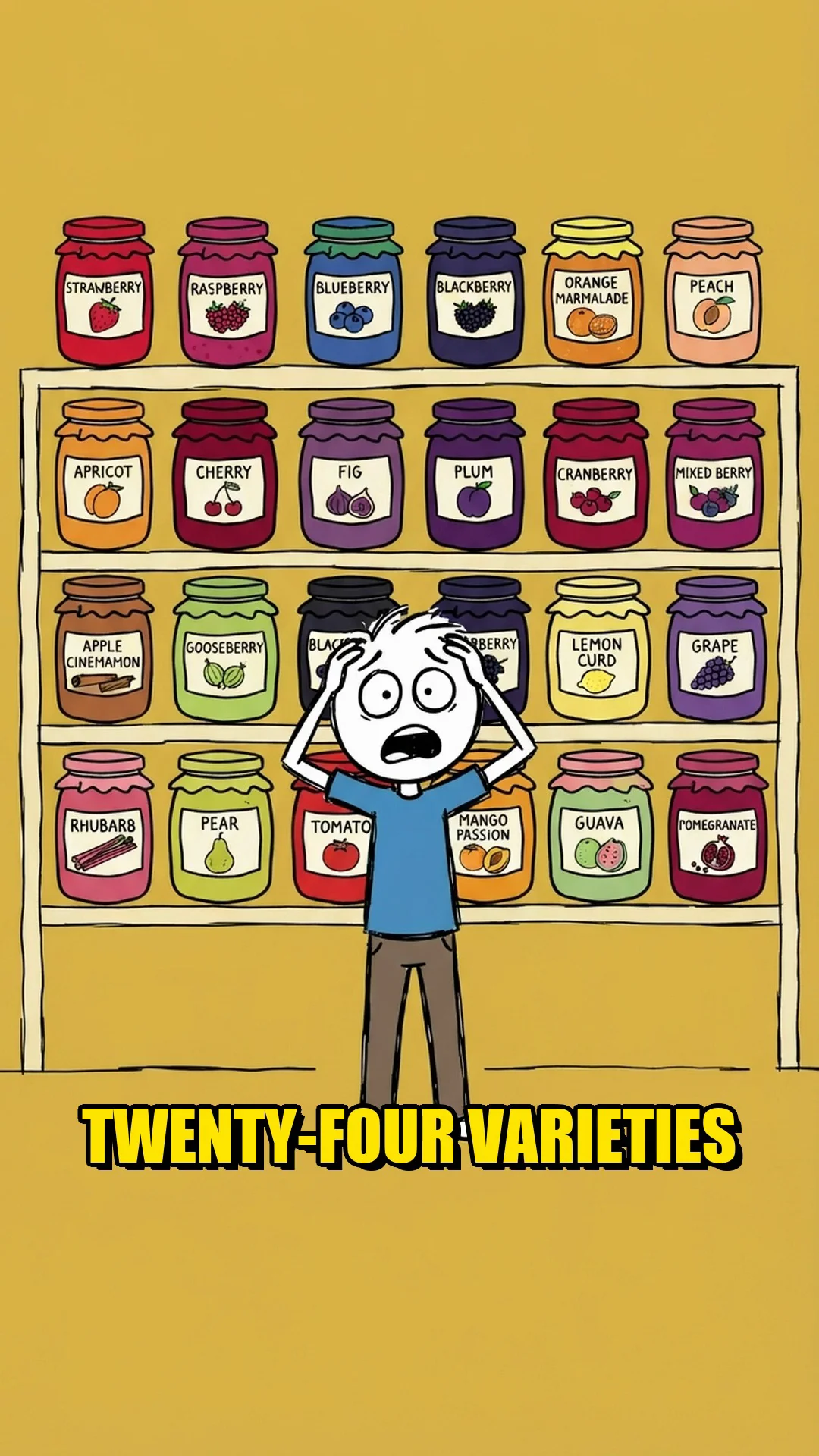
Why Having 30 Choices Makes You Pick Nothing